Answering the question “What is the best grain filler for oak?” this guide highlights top options designed to fill grain pores, reduce topcoat absorption, and deliver a glass-smooth finish for oak and other porous woods. Ideal for DIYers refinishing cabinets, vanities, and millwork, as well as professionals tackling furniture and cabinetry. The following picks balance ease of use, low odor, and strong adhesion to suit interior and exterior wood projects.
Summary table of the selected products:
- Aqua Coat White Cabinet Wood Grain Filler Gel (16 oz) – Best for deep penetration and smooth finish on oak surfaces.
- Aqua Coat Clear Wood Grain Filler Gel (16 oz) – Best for clear grain highlights and stain compatibility.
- Goodfilla White Oak Grain Filler (8 oz) – Best for professionals seeking zero-waste, reusable formula.
- Goodfilla White Oak Grain Filler (Trowel Ready, White Oak 1 Quart) – Best for trowel-ready applications and larger areas.
- Goodfilla Red Oak Grain Filler (8 oz) – Best for stainable, tintable options with durable adhesion.
Aqua Coat White Cabinet Wood Grain Filler Gel

Best for: DIYers and cabinet refinishing pros working on oak, ash, mahogany, or other porous woods where a glass-smooth finish is the goal. This gel penetrates deeply to seal pores and minimize primer and paint absorption. It is a versatile option for interiors and can also be used on millwork and furniture refinishing projects.
Why chosen: It’s specifically designed for deep penetration with a small-particle gel that reduces topcoat buildup, helping achieve a glass-like surface with fewer coats. Its waterborne formula offers low odor, easy sanding, and clean up with water, which makes it a practical choice for home projects and professional settings alike.
Limitation to note: For darker stains or dramatic color shifts, consider pairing with a compatible base filler or color-matched tint to maintain uniform color before priming.
Aqua Coat Clear Wood Grain Filler Gel

Best for: Projects where the grain should remain visually prominent or when a transparent finish is desired after sealing pores. Works well on oak, ash, mahogany, walnut, and other porous woods prior to staining or topcoats.
Why chosen: This product’s small-particle gel penetrates pores and seals grain to reduce absorption, supporting a smoother final appearance with fewer topcoats. The guidance notes favor Aqua Coat White Cabinet Filler when painting, but the clear version is ideal when you want to preserve natural wood character before staining or sealing.
Limitation to note: It is recommended to pair with appropriate finish strategies—if painting, consider the white cabinet filler for better visibility and adhesion before applying color paints.
Goodfilla White Oak Grain Filler (8 oz)
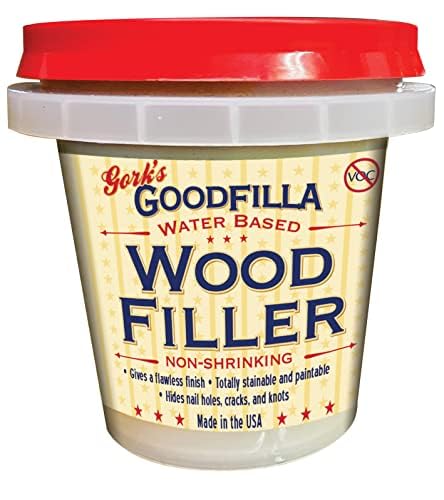
Best for: Woodworkers and DIYers seeking a high-quality, water-based filler that does not shrink or crack and accepts any finish. Goodfilla’s formula is designed for oak and other grainy woods, with strong adhesion and easy reconstitution with water.
Why chosen: It’s marketed as a versatile, zero-waste, non-toxic option with an unlimited shelf life when reconstituted, making it a practical long-term choice for frequent projects. The product supports staining, tinting, and sealing in one step, saving time on repairs and refinishing tasks.
Caution: Although highly versatile, ensure complete curing and proper sanding between coats to achieve the best smoothness and edge definition on fine-grain surfaces.
Goodfilla Water-Based Wood & Grain Filler (Trowel Ready) White Oak – 1 Quart

Best for: Professionals and serious DIYers who prefer a trowel-ready filler for larger areas and faster workflow when filling white oak grain. The trowel-ready format supports smooth, even spreads and consistent pore filling.
Why chosen: This Goodfilla variant is marketed as a professional-grade, water-based filler that resists shrinking or sinking and remains compatible with multiple finishes. Its freeze-thaw stability and reconstitutability with water add reliability in fluctuating work environments.
Limitation to note: As a larger-volume product, it may require more storage space and proper curing time in humid or cool conditions to avoid surface drag during finishing.
Goodfilla White Oak Grain Filler (1 Gallon)
Best for: Large oak projects, entire-room refinishing, floors, or multiple cabinets where a single gallon covers substantial area. The white oak variant is designed for easy sanding and broad coverage in a professional setting.
Why chosen: It emphasizes high quality, long shelf life via water-based formulation, and easy sandability. Its zero-waste and non-toxic aspects align with safer, more sustainable shop practices, especially for ongoing projects.
Limitation to note: Larger containers may require more careful storage and return-to-use practices to keep the product fresh between jobs.
Aqua Coat White Wood Grain Filler Gel – 16 oz

Best for: DIYers and pros focusing on a white grain filler that provides a smooth base before painting or lacquering. Suitable for oak, ash, and other porous woods where a bright, clean finish is desired.
Why chosen: It is marketed as a multi-use filler that seals pores and smooths surfaces while remaining compatible with various finishes. The product notes emphasize a glass-like finish with minimal coats and good adhesion across interior and exterior repairs and restorations.
Limitation to note: The product may require appropriate surface preparation and light sanding between coats to optimize adhesion and finish uniformity.
Buying Guide: Grain Fillers For Oak
What to consider before buying
- Wood type and grain complexity: Oak has open pores; look for fillers designed for deep penetration and pore sealing.
- Finish goals: Choose between clear fillers to preserve grain or white/paintable fillers for a fully covered surface before painting.
- Application method: Gel fillers are easy to spread and sand; trowel-ready options suit larger areas; white cabinet fillers are optimized for painting projects.
- Drying time and workability: Fast-drying formulas save time but require careful timing to avoid brush marks or uneven surfaces.
- VOC and odor: For indoor projects, low odor and low-VOC options improve air quality during application.
- Cleanup: Water-based fillers offer easy cleanup with soap and water but ensure compatibility with primers and topcoats.
How to apply grain filler effectively
- Prepare the surface: Sand to a smooth, clean surface and remove dust.
- Apply against the grain: Use a squeegee, putty knife, or credit card to work filler into pores.
- Remove excess: Scrape along the grain to leave a thin film; avoid pooling in pores.
- Dry and sand: Allow to dry per manufacturer guidelines, then sand with 320–400 grit for a glass-smooth finish.
- Follow with primer or stain: Choose compatible primers or stains to achieve even color and finish depth.
Choosing the right product for your project
- Best overall for oak cabinet refinishing: Aqua Coat White Cabinet Wood Grain Filler Gel (16 oz) for deep penetration and smooth finishes.
- Best for preserving natural grain: Aqua Coat Clear Wood Grain Filler Gel, especially when staining or clear coats are planned.
- Best for professional woodworkers seeking reuse and zero-waste options: Goodfilla White Oak and related trowel-ready fillers.
- Best large-volume option: Goodfilla White Oak Grain Filler (1 Gallon) for extensive projects and floors.
FAQ
- Can I use grain filler on exterior wood? Yes, select water-based fillers labeled for interior and exterior repairs, and ensure proper topcoat protection for outdoor use.
- Do these fillers require staining after application? Some are paintable or stainable; follow the product’s guidance to achieve the desired final look.
- Is water cleanup sufficient for all fillers? Most water-based fillers clean with soap and water, though some surfaces may need mineral spirits for certain finishes.
- Will grain filler affect adhesion of primer? Proper pore sealing reduces topcoat absorption, typically improving primer adhesion and finish smoothness.
- How long should I wait before sanding after applying filler? Drying times vary; follow the manufacturer’s recommendations to avoid pinholes or raised grains.
- Is there a risk of cracking with filler? Most modern fillers are formulated to resist cracking, but application thickness and drying conditions can influence performance.