Answering the question “what thinner is best for oil paint?” this guide highlights odorless, artist-grade solvents that thin oils without compromising color or texture. These products are ideal for professional studios, art students, and hobbyists who want smoother blends and easier brush cleaning. Each pick is evaluated for flow, color fidelity, and versatility across mediums, with practical cautions where needed. Whether you’re thinning thick oil colors or cleaning brushes after a session, these options help maintain pigment integrity while improving workability.
Summary table of selected products:
| Product | Best For | Key Benefit |
|---|---|---|
| Bellisinno Odorless Mineral Spirits | Studio painters and educators | Preserves color while thinning and cleaning |
| Yeardera Odorless Paint Thinner | All-around oil painters | Consistent flow without color shift |
| Sunnyside Pure Odorless Paint Thinner | Thinners in safe, VOC-restricted areas | Completely odorless for sensitive environments |
| PHOENIX Oil Paint Thinner 250ml | Brush cleaning and thinning | Low-odor, refined distillates |
| Gamblin Artists’ Grade Gamsol | Safest thinning solvent option | Environmentally friendlier than traditional turpentine |
Odorless Mineral Spirits 100ml — Bellisinno

Best for: Professional studios and teaching environments where odor control is essential. This odorless mineral spirits thinning agent preserves the true color of oils while offering smooth, consistent flow. It also serves as a reliable brush cleaner, dissolving oil residues without leaving a strong aroma. Caution: despite being odorless, use in well-ventilated spaces and away from heat sources.
Odorless Paint Thinner — Yeardera (Artist-Grade)

Best for: Artists who demand consistent flow and color fidelity across sessions. Yeardera’s odorless thinner maintains true tones, improves paint flow, and doubles as a brush cleaner. It’s suitable for thinning thick oils, modifying mediums, and softening brushstrokes. Limitation: ensure small quantities are used to avoid over-thinning and color loss in delicate passages.
Sunnyside Pure Odorless Paint Thinner — Quart

Best for: Artists working in spaces with strict VOC regulations or requiring fully odorless solvents. Sunnyside’s odorless solvent is designed for thinning oil-based paints, primers, varnishes, and stains, and can also dissolve grease and grime. Limitation: not available in California and other VOC-restricted zones.
PHOENIX Oil Paint Thinner 250ml

Best for: Painters seeking a refined, low-odor diluent for thinning oil paints and cleaning brushes. PHOENIX uses hydrotreated distillates to balance safety and performance, preserving pigment brightness while improving flow. Caution: always use with adequate ventilation and avoid skin contact with prolonged exposure.
Gamblin Artists’ Grade Gamsol — 16.9 oz

Best for: Painters seeking a safer alternative to turpentine with good thinning and brush-cleaning performance. Gamsol is designed to be gentler on both painters and the workspace while maintaining pigment integrity. Limitation: as with all solvents, use in a well-ventilated area and avoid prolonged skin contact.
PHOENIX Oil Paint Thinner 500ml
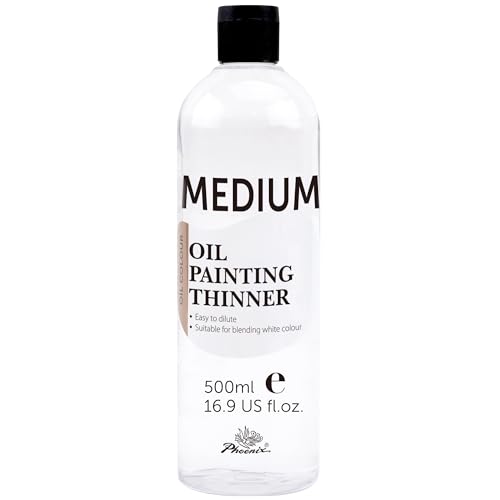
Best for: Larger studio setups needing a reliable intermediate-volume thinner. PHOENIX 500ml provides similar benefits to the 250ml version, with extended use between purchases. Caution: store in a cool, ventilated area away from heat sources and open flames.
Buying Guide
- What thinning performance do I need? Consider whether you require just thinning, brush cleaning, or both. Look for products that maintain pigment integrity while improving flow.
- Are there color-preserving formulas? Choose odorless, mineral-spirit-based thinners that advertise color fidelity and minimal solvent interference with color shifts.
- What about safety and ventilation? Odorless options still require good ventilation, especially in enclosed spaces. Some products are more VOC-regulated than others.
- Best for your painting environment? If you work in a classroom or studio, odorless and low-odor solvents reduce fumes and headaches over long sessions.
- Brush care and cleanup considerations? Some thinners double as brush cleaners—evaluate if you want a single product solution to thinning and cleaning.
- Volume vs. price balance? For frequent use, larger bottles save trips to the store, but smaller bottles are convenient for travel or class demonstrations.
Frequently Asked Questions
- What is the safest thinner for oil painting? Odorless mineral spirits labeled for artist use are generally safer and less pungent than traditional turpentine, but proper ventilation is still essential.
- Can I use these thinners to remove oil paint from brushes? Yes, many odorless thinners dissolve paint residues, aiding brush cleanup after painting.
- Will thinning affect color? High-quality odorless thinners are designed to preserve color fidelity while improving flow; always test small ratios first.
- What should I avoid when using thinners? Avoid open flames or high heat near solvents and minimize skin contact by using gloves if needed.
- Is a larger bottle worth it? For frequent painters, larger sizes reduce frequent replacements, but consider storage space and usage rate.
- Are these suitable for all oil painting styles? Yes, they are versatile for studio, classroom, and plein-air use across various oil mediums.