Answering the question “which paint works best on concrete block?” this guide highlights five top selections that balance adhesion, coverage, and longevity. The best picks cover self-priming masonry paints, interior/exterior waterproofing coatings, and durable exterior finishes. Ideal buyers include DIY homeowners tackling basements or brick walls, contractors seeking quick priming, and renovators needing weather-resistant results.
| Product | Best For | Key Benefit |
|---|---|---|
| KILZ Self-Priming Masonry, Stucco and Brick Paint | Interior/Exterior on textured block | Self-priming; great adhesion; water repellency |
| Zinsser Bulls Eye 1-2-3 All Surface Primer | New or repainted surfaces | Sticks to difficult surfaces without sanding |
| KILZ Basement and Masonry Waterproofing Paint | Basements and masonry walls | Blocks water intrusion; alkali resistant |
| INSL-X WaterBlock Acrylic Masonry Paint | Interior/exterior concrete walls | Waterproof, fast-drying; high alkali resistance |
| Hensire Black Exterior Wall Paint for Concrete & Masonry | Exterior brick/concrete surfaces | Strong adhesion; durable outdoor color |
KILZ Self-Priming Masonry, Stucco and Brick Paint

This acrylic latex, water-based paint is designed for interior and exterior use on textured masonry, drywall, stucco, brick, and more. It provides excellent hiding power and adhesion, with water repellency for damp environments. Its self-priming feature simplifies the workflow, letting you roll, brush, or spray. Best for DIY projects where quick coverage on concrete blocks is needed, especially in high-humidity areas.
Best for: DIY homeowners and contractors needing a reliable, easy-to-apply finish on textured block surfaces. Cautions: test on very rough surfaces for uniform film formation; avoid use on active leaks or severely damp conditions.
Zinsser Bulls Eye 1-2-3 All Surface Primer

This water-based primer is formulated for interior and exterior use on new or previously painted drywall, concrete, masonry, metal, and glossy surfaces. It seals uniformly and adheres without sanding, drying to the touch in about 30 minutes and recoating in an hour. It covers up to 100 sq. ft., making it ideal when a reliable base coat is required before painting concrete blocks.
Best for: Surfaces requiring heavy adhesion with minimal prep. Cautions: not a substitute for a dedicated masonry sealer on actively leaking substrates; ensure surfaces are clean and dry for best results.
KILZ Basement and Masonry Waterproofing Paint

Designed for below-grade and above-grade masonry, this waterproofing paint uses nanotechnology to form a water barrier that blocks up to 12 PSI of water pressure. It is suitable for basement walls, retaining walls, and other concrete surfaces. Not intended for use on floors or in areas with active leaks. Best for: areas needing water resistance in basements and exterior masonry. Caution: do not rely on it where continuous leaks exist without proper drainage and crack repair.
Ames Block & Wall Liquid Rubber Waterproofing
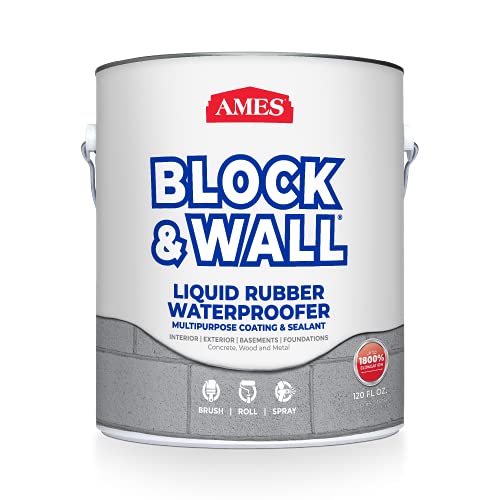
This white liquid rubber coating provides multi-purpose waterproofing for concrete block, brick, and foundations. It serves as a concrete sealer and waterproofer, offering a flexible layer that resists moisture ingress on below-ground and exterior masonry projects. Best for: foundational walls and areas prone to dampness. Caution: check coverage rates and surface preparation requirements for full-curing strength.
Hensire Black Exterior Wall Paint for Concrete & Masonry

This exterior wall paint is designed to adhere to concrete and masonry textures, delivering strong outdoor performance with resistance to peeling and moisture. Available in dark and neutral shades, it helps hide surface imperfections while maintaining color longevity in sun and rain. Best for: exterior brick or concrete facades needing a durable finish. Caution: darker colors may show touch-up differences on weathered surfaces over time.
Buying Guide
What to consider when choosing concrete block paint or coating
- Surface type: Interior vs exterior, bare concrete vs previously painted surfaces, and texture level influence primer choice and finish.
- Water exposure: Basement walls and outdoor walls benefit from waterproofing or alkali-resistant formulas.
- Coverage and dry time: Primers can speed up recoats; consider faster dry times if the project has weather windows.
- Application method: Options include roll, brush, or spray; self-priming formulas reduce steps but may need additional coats for textured surfaces.
- Durability vs aesthetics: Choose finish based on traffic, UV exposure, and whether color fastness or moisture barrier is the priority.
Frequently Asked Questions
- Q: Do I need a primer on concrete block before painting? A: It depends on the product. Some paints are self-priming and can work on properly prepared surfaces, while others require a primer for best adhesion.
- Q: Is waterproofing paint necessary for basement walls? A: For areas prone to moisture, a waterproofing or water-repellent coating provides better protection against water infiltration.
- Q: Can I use concrete paint on masonry brick? A: Yes, many concrete and masonry paints are suitable for brick and block textures, but surface prep and crack sealing improve performance.
- Q: How long does it take for these coatings to dry? A: Dry times vary; many interior primers dry within 30 minutes to 1 hour, while paints may need several hours before recoating.
- Q: Which product is best for external brick façades? A: Exterior-rated paints like Hensire or KILZ waterproofing variants provide durable outdoor finishes.
- Q: Are these products safe for basements? A: Interior and basement-friendly options, such as waterproofing paints and alkali-resistant finishes, are recommended for below-grade spaces.