Answering the question “which gray paint is best for walls?” this guide highlights five strong options and clarifies who each product is best for. Whether you want a durable all-in-one coat, a low-odor interior finish, or a touch-up solution for high-gloss surfaces, these selections cover common needs from living rooms to kitchens. The top picks include options for DIY homeowners, color-conscious designers, and professional painters seeking speed and reliability. Use the quick reference table to compare core strengths and ideal uses before reading deeper product details below.
| Product | Best For | Why It Stands Out |
|---|---|---|
| The One All-In-One Paint & Primer – Dark Grey Matte | DIYers and quick-turn projects | One-coat coverage with multi-surface versatility |
| Rust-Oleum Painter’s Touch Latex Acrylic – Satin Stone Gray | Medium-sized indoor/outdoor projects | Low odor, durable finish, good coverage |
| Zinsser Bulls Eye 1-2-3 All Surface Primer — Gray | New or previously painted surfaces needing strong adhesion | Seals and sticks to difficult surfaces without sanding |
| EVOLVE Interior Paint & Primer – Graphite Gray (Satin) | Hiding power and easy cleanup in high-use spaces | One-coat coverage with multiple sheens and low VOC |
| Gray Touch Up Paint Pen (SENVEN) | Spot repairs on metal, wood, and appliances | Fast-drying, high-gloss touch-ups with precision tip |
THE ONE All-In-One Paint & Primer – Dark Grey Matte

Best for: DIYers who want a single-coat solution that claims to cover walls, floors, furniture, and more in one pass. This option markets itself as a paint-and-primer-in-one with a durable matte finish. It’s particularly suited to quick projects where minimal surface prep is possible and where a uniform gray is desired across multiple substrates.
Why selected: Its all-in-one formula promises significant time savings by combining priming and painting steps. The product description emphasizes high opacity and fast drying, which can help when matching gray tones across furniture and trim in a single project. The matte finish reduces glare and can hide minor surface imperfections well.
Limitations to consider: The one-coat claim may vary by surface porosity and color under existing coatings. For glossy or heavily textured surfaces, additional preparation or a test patch is advised to confirm hide and adhesion. Best for bedrooms, living areas, and utility spaces where a flat, modern gray is desired.
Rust-Oleum Painter’s Touch Latex Acrylic Paint – Satin Stone Gray
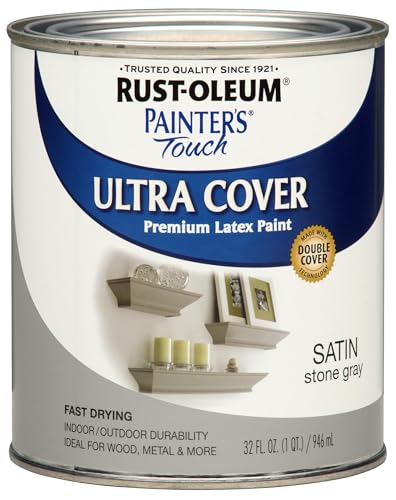
Best for: Projects requiring good color consistency and a balanced sheen in interior and exterior contexts. The satin finish adds a touch of softness while remaining durable for kitchens, hallways, and exterior accents on surfaces like wood, metal, and masonry.
Why selected: This option is known for low odor and relatively quick dry times, with coverage that suits medium-scale rooms or exterior facades. Its water-based acrylic formulation helps resist chipping and provides long-lasting protection with a smoother finish than flat paints.
Limitations to consider: Coverage data is approximate and depends on surface texture and porosity. Satin finishes can show roller marks on rough textures if application isn’t even. Best for spaces where a subtle sheen improves depth and warmth without attracting heavy glare.
Zinsser Bulls Eye 1-2-3 All Surface Primer, Gray

Best for: Surfaces that require reliable adhesion on new drywall, concrete, masonry, metal, or gloss finishes. Ideal when peeling or chalky surfaces exist or when painting over previously painted surfaces that demand a uniform base.
Why selected: The gray primer variants from Zinsser are designed to seal and promote even paint application without extensive sanding. The product counts as a spray-friendly or brushable base that accelerates recoating timelines, reducing surface preparation steps for many projects.
Caution: While a primer supports bond strength, you’ll still need compatible topcoats. For dark-to-light transitions, consider testing how the final gray appears over your selected topcoat to avoid unintended color shifts.
EVOLVE Interior Paint & Primer – Graphite Gray (Satin)
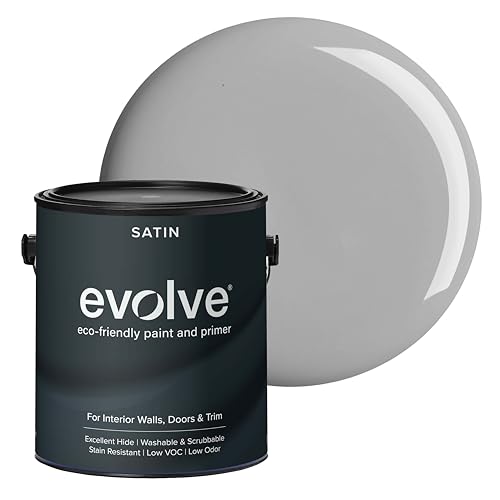
Best for: High-use interiors like kitchens, bathrooms, or kids’ rooms where durability and washability matter. Satin sheen balances ease of cleaning with a refined appearance.
Why selected: EVOLVE emphasizes one-coat coverage with low VOC and low odor, appealing to spaces where air quality and ease of maintenance are priorities. The satin finish provides a slightly polished look while remaining practical for frequent cleaning.
Limitations to consider: Availability is tied to color options and sheens; ensure Graphite Gray satin matches your overall color palette. For very dark or very light schemes, perform a test patch to confirm hide and tone in the room’s lighting.
Gray Touch Up Paint Pen – SENVEN
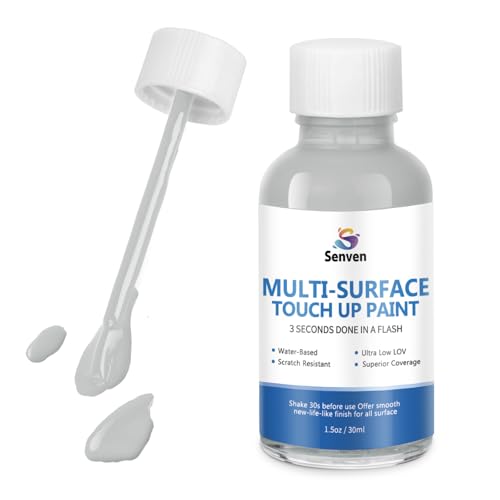
Best for: Quick, precise repair work on metal, wood, walls, cabinets, and appliances. The high-gloss finish is ideal for touch-ups that match glossy gray surfaces.
Why selected: The pen-style applicator supports edge precision and neat touch-ups, reducing the need for broader repainting. It’s suitable for small chips, scratches, or edge repairs on glossy gray finishes.
Limitation: This is a touch-up product rather than a full-room paint solution. For larger areas or color-match consistency, a larger-format paint might be preferable, and ensure the gloss level aligns with surrounding surfaces.
Buying Guide: How to Choose The Right Gray Paint For Walls
Finish, coverage, and surface compatibility drive the best choice. Consider the space, the level of wear, and whether you want a single-coat solution or a primer-plus-pinish approach. Below are practical questions to guide decision-making.
What finish should I choose for a gray wall?
Matte finishes hide surface imperfections but show wash marks more easily. Satin provides a balance of durability and subtle sheen, good for living rooms and hallways. If cleaning is a priority (kitchens, bathrooms), a satin or semi-gloss may be better, but expect more reflection.
Do I need a primer with gray paint?
Primers improve adhesion on new drywall and problematic surfaces. All-in-one products can save time on simple projects, but primers are advisable when switching from a glossy surface, painting over dark colors, or addressing staining.
How much coverage should I expect?
Coverage depends on porosity, color, and the number of coats. Some products claim one-coat coverage; test patches on the actual surface to verify. Most mid-sized rooms require at least two coats for a uniform finish, especially over dark or contrasting previous colors.
Is odor or VOC a concern for interior walls?
Low-VOC formulas reduce odors and indoor air impact. If occupants include children or sensitivities, prioritize low-odor options and ensure adequate ventilation during painting and drying times.
Which type of gray should I choose for large rooms?
Mid-tone grays tend to read well with most furniture and lighting. Lighter grays can brighten a space and work with modern minimalist looks, while deeper charcoals create dramatic contrast with white trim or natural wood.
Are touch-up pens enough for long-term maintenance?
Touch-up pens are best for small chips or scratches on glossy surfaces. For larger areas or color matching across surfaces, consider keeping extra paint and a roller handy for spot repairs or periodic refreshes.
What’s the right approach for multi-surface projects?
If you’re painting walls, ceilings, furniture, and trim, a versatile all-in-one product can simplify the process. For distinct surfaces with different porosity or gloss requirements, use primers on problematic areas and select topcoats aligned with each surface’s needs.
Quick FAQs
- Q: Can I use gray paint outside? A: Some formulations are designed for exterior use; verify product labels for outdoor suitability and UV resistance.
- Q: How long before I can recoat after using a primer? A: Recoat times vary; most primers are ready to topcoat within 1–4 hours depending on the product and conditions.
- Q: Will a gray paint darken a room? A: Deep or charcoal grays absorb more light, making rooms feel cozier; lighter grays reflect more light and can brighten spaces.
- Q: Do I need special brushes for satin finishes? A: Use synthetic bristle brushes or microfibers; avoid overly rough tools that can create streaks on satin finishes.
- Q: How do I ensure color consistency across a project? A: Order sufficient quantity from the same batch and store leftover paint for touch-ups; test color with a sample board in the room’s lighting.
- Q: Are these products safe for homes with sensitive occupants? A: Look for low-VOC or zero-VOC options and ensure proper ventilation during painting and drying times.