Choosing the right drywall mud roller can speed up work and improve finish quality. This guide highlights five top options that excel at applying joint compound across walls and ceilings, with clear notes on who benefits most from each tool. If you’re shaping seams, texture, or finish coats, these picks balance efficiency, durability, and user comfort. Ideal buyers include professional remodelers, DIY homeowners tackling large areas, and contractors who need reliable, reusable rollers for repeated projects.
Summary Table of Selected Products
- LEVEL5 9″ Drywall Compound Roller | 4-905 — Best for high-coverage, faster seams work
- PinStone 5pcs 9″ Drywall Compound Roller Covers — Best value set with shed-resistant performance
- Threlaco 3 Pcs 9 Inch Drywall Compound Roller Cover — Best all-in-one starter set
- PinStone 2pcs 9″ Drywall Compound Roller Covers — Best for ongoing projects with extra durability
- ROLLINGDOG 9″ Drywall Compound Roller Cover — Best for heavy-duty, large-area use
LEVEL5 9″ Drywall Compound Roller

Best for high-coverage seams and quick pre-smoothing. This 9-inch, 3-inch-thick roller is designed to roll drywall compound on taped seams efficiently before the final skim. It uses a ½-inch thick reticulated polypropylene nap that accepts more compound than typical high-nap rollers, reducing rework. The ergonomic handle offers a soft-grip for comfortable extended use, even when the tool gets wet or soiled. Choose this if you’re aiming to speed up seam work on larger panels and ceilings.
Who it’s best for: professionals or serious DIYers working on large rooms who want faster seam application with less pass count. Caution: the long sessions can still tire the shoulders; pair with a comfortable stance or break time.
PinStone 5pcs 9″ Drywall Compound Roller Covers

Best value bundle with shed-resistant performance. The 1/2″ nap nylon roller covers are tightly woven to resist shedding, providing consistent mud application across walls and ceilings with minimal drips. They fit standard 9-inch frames and are noted for durability through repeated use. Use these when you need multiple covers and want dependable performance across several rooms.
Who it’s best for: budget-conscious painters and those who change out covers frequently on multiple projects. Limitation: spindle compatibility is common with standard 9″ frames, but some frames may vary in fit; verify your frame before use.
Threlaco 3 Pcs 9 Inch Drywall Compound Roller Cover

Best all-in-one starter set for covering walls and ceilings. The package includes three 9-inch rollers plus a paint frame. The stands feature a galvanized steel roller stand for durability, and the handle shape emphasizes a secure grip in wet conditions. This option is well-suited for new users or those who want a complete starter bundle to begin mudding and texturing in one go.
Who it’s best for: first-time drywall projects or anyone who prefers an out-of-the-box solution. Caution: ensure the frame is compatible with your preferred handle if you plan to switch to poles or different frames later.
PinStone 2pcs 9″ Drywall Compound Roller Covers
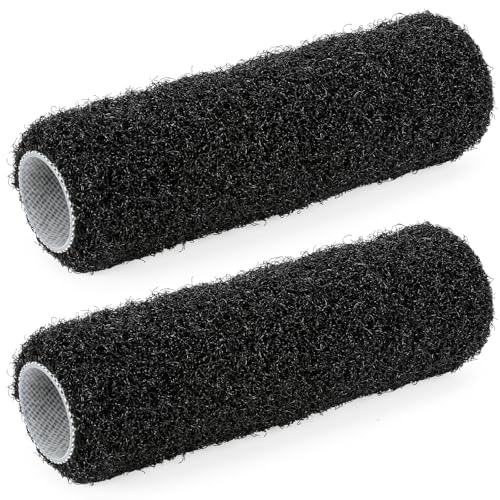
Best for ongoing projects with extra durability. These 1/2″ nap nylon covers are designed for long-term use with minimal shedding and consistent mud application. They fit standard 9-inch frames and are described as flexible compared to some brands’ insert types, which can ease repeated use across multiple walls and ceilings. Consider this set when you’re maintaining consistent texture across rooms.
Who it’s best for: crews or DIYers who want dependable, repeatable results with an extra cover pair ready for immediate replacements. Limitation: some frames may feel stiffer to maneuver in tight corners compared to smaller tools.
ROLLINGDOG 9″ Drywall Compound Roller Cover

Best for heavy-duty, large-area use. This 9-inch roller cover is designed to distribute compound evenly across substantial wall surfaces. The synthetic material maintains shape and performance after repeated uses, and the nap length is tuned to hold and lay down the right amount of compound with fewer drips. Pick this when speed matters on big jobs with consistent mud distribution.
Who it’s best for: professionals working on flats and drywall projects spanning multiple walls. Caution: heavy-duty rollers can be bulkier to handle in tight joints or around corners; use a smaller tool for detail work.
LEVEL5 12″ Drywall Compound Roller

Best for large, open surfaces where a wider roll reduces pass count. The 12-inch width is optimized for high-volume mud application prior to final skim coats, with a nap design that helps even coverage. The ergonomic handle supports long sessions, even when working overhead. Choose this for expansive ceilings or large wall planes to minimize repetition.
Who it’s best for: flooring-to-ceiling projects or rooms with wide, uninterrupted walls. Limitation: wider rollers may be awkward in tight corners or around obstacles; plan tool transitions accordingly.
Buying Guide: Key Considerations For Drywall Mud Rollers
- Roll width: Wider rollers cover more area but are harder to use in tight corners. For small rooms, a 9″ or 10″ roller is typically ideal.
- Nap length and material: Longer naps hold more compound and reduce passes but can drip more. Nylon or polypropylene nap types are common and durable; choose based on your mud consistency.
- Frame compatibility: Ensure roller covers fit standard 9″ frames unless you plan to buy a specialty frame. Check inner cores and snap-fit designs for easy removal.
- Durability and shedding: Shedding can ruin a finish. Look for tightly woven nap and reinforced ends, especially on price-conscious sets.
- Set vs. single covers: Sets provide value and ready replacements, while singles let you tailor coverage based on project size and mud type.
- Maintenance: Rinse covers immediately after use to prevent mud from hardening. Some materials dry faster and resist staining better than others.
- Comfort and ergonomics: A soft-grip handle helps reduce fatigue during long sessions. Consider grip texture and balance with your usual working posture.
FAQ
- What roller is best for drywall mud seams?
Rollers with longer naps and high coverage, like Level5 9″ or 12″ options, help spread compound over taped seams quickly. Use a skimming blade afterward for a smooth finish.
- How do I prevent roller nap shedding?
Choose tightly woven nylon or polypropylene rollers and rinse new covers before first use to remove loose fibers. Avoid overloading the nap with mud.
- Can I use the same roller for mud and texture?
Yes, but consider nap length and material. Texture work often benefits from a slightly stiffer nap that resists flattening under heavier material.
- Is a 12-inch roller better than a 9-inch?
For large, flat surfaces, a 12-inch roller can save time. For tight spaces, a 9-inch roller offers better control.
- How important is frame compatibility?
Very important. An incompatible frame can cause uneven coverage or binding. Always verify frame size and attachment method with each set.
- Should I buy a multi-pack or individual rollers?
Multi-packs save money and ensure replacements are on hand. Individual rollers are useful when you know your exact project needs.