Looking for the best paint options to treat basement walls? This guide highlights top basement-friendly paints and primers that help block moisture, resist mold, and keep interior walls looking clean. Ideal buyers: homeowners tackling moisture-prone basements, DIYers painting concrete or masonry, and contractors needing durable, easy-to-clean finishes. The table below summarizes the five recommended products and their key strengths.
| Product | Best For | Why It Stands Out |
|---|---|---|
| Zinsser 02774 PERMA-WHITE Mold & Mildew Proof | Moist areas seeking mildew resistance | Self-priming; mold/mildew-proof film with 5-year guarantee |
| KILZ Basement & Masonry Waterproofing Paint | Basements with water concerns | Nanotechnology water barrier; interior/exterior versatility |
| INSL-X WaterBlock Acrylic Masonry | Fast-drying moisture sealing | Water-based; high alkali resistance; interior/exterior use |
| Zinsser WaterTite-LX Mold & Mildew-Proof | Waterproofing for walls with mildew risk | Stops water pressure; bright white, easy to apply |
| Zinsser WaterTite Damp Wall Primer | Directly on damp walls | Direct-use damp-wall primer with hydrostatic pressure resistance |
Zinsser 02774 PERMA-WHITE Mold & Mildew Proof Interior Paint

The Zinsser PERMA-WHITE line offers a self-priming formula that requires no sanding. It forms a mold and mildew-proof film, guaranteed for five years, helping basement walls stay cleaner for longer. This option is best for readers who want a straightforward, maintenance-friendly finish on interior basement walls and are particularly concerned about mildew resistance in damp spaces.
Best for: basements with humidity concerns and DIYers who prefer a quick, one-coat solution. Limitation: not specifically designed for continuous water exposure; ensure proper surface preparation for best results.
KILZ Basement and Masonry Waterproofing Paint

This product uses nanotechnology to create a robust water barrier, blocking up to 12 PSI of water pressure. It is versatile for both interior and exterior use, making it suitable for various basement walls such as concrete, brick, and cinder blocks. It’s a strong choice when moisture infiltration is a primary concern, and it doubles as a long-lasting finish for damp environments. For below-grade applications, prepare by filling holes with hydraulic cement first. Do not use on floors or walls with active leaks.
Best for: basements with visible or suspected water intrusion. Caution: not intended for active leaks and may require crack repairs prior to application.
INSL-X WaterBlock Acrylic Masonry Paint
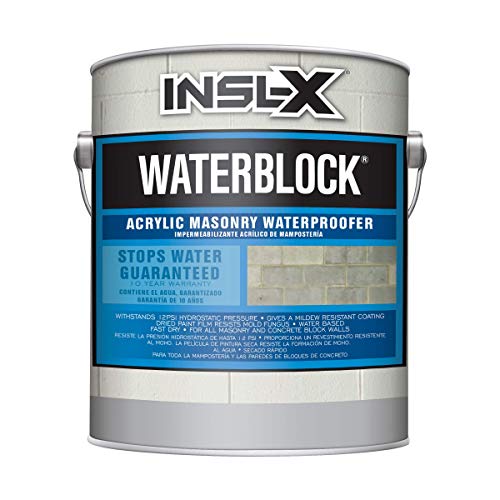
WaterBlock is a fast-drying, water-based acrylic coating designed to seal vertical masonry walls. It performs well on basement walls, foundations, and retaining walls, with high alkali resistance up to pH 13. This makes it a practical option when you need a moisture-resistant finish that also tolerates alkaline concrete. It can be used on both interior and exterior surfaces, offering flexibility for multifaceted projects.
Best for: quick-drying, moisture-sealing projects where an alkaline-resistant finish is needed. Limitation: ensure adequate ventilation during application due to solvent-like odor in some formulations and check for suitability on very damp surfaces.
Zinsser 293233 Dryfall Commercial & Industrial Coating

Dryfall is a waterborne coating designed for indoor use on a variety of surfaces, including drywall, wood, concrete, and masonry. While it is more commonly used in commercial settings, it offers a durable finish for basement walls where cleanliness and maintenance are a priority. The product can cover large areas and is designed to hide imperfections with a high-hiding formula. This makes it a solid option when a uniform look is desired across broader basement spaces.
Best for: projects requiring a high-hiding, industrial-grade interior finish. Caution: primarily designed for dry environments; verify moisture conditions before use in chronically damp areas.
TUFINEIN Rubber Liquid Waterproof Sealant

This flexible rubber sealant provides a durable waterproof coating for small cracks and gaps on various surfaces, including basement walls. It cures into a durable, elastic film that resists temperature changes and weathering. It is best used as a supplementary sealant around joints and cracks rather than a stand-alone finish for entire walls. Consider this product if you need localized waterproofing in basement corners or around penetrations.
Best for: sealing cracks and improving waterproofing around joints. Limitation: not intended as the primary wall finish for large surface areas or wet-wall scenarios with continuous leakage.
Pro Grade Paint Roller Kit

This 10-piece kit includes a plastic paint tray, two roller frames, several microfiber roller covers, and multiple brushes. It offers a complete, ready-to-use solution for painting basement walls with any of the above products. The kit is versatile for large surface areas and detail work, making it a practical option for DIY basement projects where a coordinated set of tools is helpful.
Best for: DIYers seeking an all-in-one painting toolkit for basement walls. Caution: ensure compatible rollers for concrete or masonry paints to achieve the best finish quality.
Buying Guide: Key Considerations For Basement Walls
Water exposure, humidity, and surface type drive paint selection for basements. Here are practical questions and guidance to help you choose.
- What surface are you painting? Concrete, masonry, or drywall require different primers and sealants. Direct-apply primers like WaterTite Damp Wall Primer are useful on damp concrete, while latex-based paints with mold/mildew resistance suit dry-to-humid interiors.
- Is humidity or moisture a constant concern? For ongoing moisture, use waterproofing paints or membranes with hydrophobic features, such as nanotechnology-based coatings, to block water transmission.
- Do you need mildew resistance? Products like PERMA-WHITE and WaterTite-LX offer mildew-proof films that can help maintain a cleaner basement environment.
- What about alkali resistance? Basements often have high alkali levels; high-alkali resistant coatings prevent degradation and extend finish life.
- Do you prefer a primer-plus-paint approach? Some products combine priming with coating; for damp or previously painted walls, a dedicated primer may still be beneficial to ensure adhesion and sealant performance.
- Can you tolerate odor and drying times? Water-based acrylics and latex formulas typically dry faster and emit fewer odors, but ventilation remains important during application.
Quick Comparison At A Glance
- Best overall mildew protection: Zinsser PERMA-WHITE
- Best for active moisture concerns: KILZ Basement & Masonry Waterproofing Paint
- Best fast-dry, alkaline-resistant: INSL-X WaterBlock
- Best direct damp-wall primer: Zinsser WaterTite Damp Wall Primer
- Best all-in-one painting kit for DIY: Pro Grade Roller Kit
FAQ
- What is the difference between waterproofing paint and a damp-proof primer? Answer: Waterproofing paints create a barrier that resists water intrusion, while damp-proof primers prepare surfaces and improve adhesion for subsequent coatings on damp walls.
- Can I paint directly over damp walls? Answer: Some products are designed for damp surfaces, like WaterTite Damp Wall Primer; however, ensure the wall is stable and consult product guidelines for moisture levels.
- How long does basement paint typically last? Answer: Durability depends on surface condition and moisture management; choose mildew-resistant or waterproofing formulations for longer-lasting finishes in basements.
- Should I use a primer with basement paints? Answer: For new concrete or highly porous surfaces, a primer improves adhesion and coverage; damp areas may benefit from a damp-wall primer before topcoat.
- Is there a best practice for applying basement paints? Answer: Clean surfaces, fill cracks, address leaks, apply even coats, and follow manufacturer drying times; ensure adequate ventilation during application.
- Are these products safe for indoor use? Answer: Most are water-based latex or acrylic formulas designed for indoor use, but always follow labeling for ventilation and safety guidelines.