Finding the right brick wall sealant involves balancing moisture control, durability, and surface aesthetics. This guide highlights five reliable options suited for brick walls, both indoors and outdoors. Each product is selected for ease of use, coverage, and effectiveness against water intrusion and staining. The top picks are ideal for homeowners, contractors, and DIYers looking to protect foundations, basements, patios, and exterior brick facades.
| Product | Best For | Key Benefit |
|---|---|---|
| Ames Block & Wall Liquid Rubber | Foundations and basements | Waterproofer that doubles as a concrete sealer |
| TUFINEIN Transparent Waterproof Coating 35oz | Visible areas where aesthetics matter | Clear, self-leveling membrane that preserves surface appearance |
| TUFINEIN Waterproof Sealant 70oz | Outdoor brick walls and sheds | Clear, durable waterproofing for indoor/outdoor use |
| UGL Drylok Siloxane 1 Gallon | Brick & masonry protection | Penetrating sealant for long-lasting defense |
| LISRUX Transparent Waterproof Sealant 141 Oz | Indoor/outdoor brick and stone projects | Low-sag, high-adhesion clear sealant |
Ames Block & Wall Liquid Rubber Waterproofer
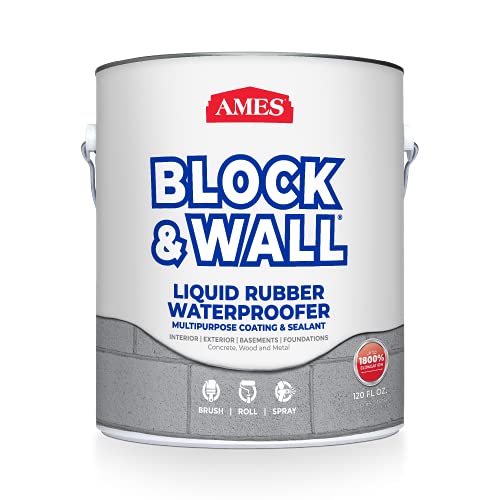
Ames Block & Wall Liquid Rubber serves as a moisture barrier for concrete and brick surfaces. It is used as a waterproofer for basements and foundations and can function as a concrete sealer. Best for buyers seeking a US-made option with straightforward application on rough masonry surfaces. Caution: product weight and handling may require multiple coats for fully vertical surfaces.
TUFINEIN Transparent Waterproof Coating 35oz

This clear, water-based sealant cures into a dense waterproof membrane while preserving surface color and texture. It is suitable for indoor and outdoor brick walls, roofs, and planters. It is best for projects where visibility of the sealant must be minimal. A potential limitation is that it forms a membrane rather than a deep-penetrating seal, so extremely porous substrates may require priming or additional coats.
TUFINEIN Waterproof Sealant 70oz

Clear, semi-transparent waterproof glue suitable for both indoor and outdoor brick walls and other masonry. Best for projects needing a flexible membrane that resists temperature fluctuation while maintaining aesthetic value. Choose this if you want a versatile sealant for various substrates, including wood, metal, and ceramics. Limitation: as a clear coating, very dark bricks may show slight color shifts in certain lighting.
UGL Drylok Siloxane 1 Gallon

Drylok Siloxane is a penetrating masonry sealant designed for brick and concrete. It provides vapor permeability to allow moisture to escape while reducing water intrusion. Best for exterior brick walls and foundations where a breathable, long-lasting defense is needed. Limitation: it may require multiple applications for heavily porous brick and can be less effective against standing water than surface-applied coatings.
LISRUX Transparent Waterproof Sealant 141 Oz

Clear, water-based sealant designed to fill small gaps up to 2mm with a self-leveling formula. It offers high adhesion, low sag, and good low-temperature resistance. Best for homeowners who want a long-lasting, aesthetically unobtrusive seal on brick, plaster, and similar surfaces. Limitation: best for small gaps; very deep crevices may need additional products or sealant with higher viscosity.
Buying Guide
What to consider when selecting brick-wall sealants:
- Surface penetration vs. surface coating: Penetrating siloxanes protect from within; surface coatings seal the surface with a membrane. Choose based on porosity and desired appearance.
- Indoor vs. outdoor use: Outdoor sealing requires weather resistance and UV stability; indoor products may prioritize odor control and color retention.
- Breathability: For brick walls that must vent moisture, select products that allow vapor transfer to prevent trapped moisture buildup.
- Finish preference: Clear sealants preserve brick color; white or tinted coatings can alter appearance. Consider blending with existing brick aesthetics.
- Application method and coverage: Sprayer, brush, or roller compatibility affects project speed. Check coverage per gallon to estimate quantities accurately.
- Durability and maintenance: Look for flexible, crack-bridging formulas for moving masonry joints and seasonal temperature changes.
Frequently Asked Questions
- What is the difference between penetrating sealants and surface coatings for brick?
Penetrating sealants absorb into the brick to repel water; surface coatings form a protective layer on top. Penetrating types typically allow better moisture movement, while coatings can provide a stronger barrier against stains and water penetration. - Can I seal brick walls indoors and outdoors with the same product?
Some products are designed for both environments, but many are optimized for either indoor or outdoor use. Always check the label for suitability and cure times. - Will sealants affect brick color or texture?
Clear sealants preserve color and texture, while tinted or white coatings can alter appearance. Test on a small area if color fidelity is critical. - How often should brick sealants be reapplied?
Reapplication intervals vary by product and exposure, but exterior seals typically require refreshment every 3–10 years depending on climate and substrate. - Is surface preparation important before sealing brick?
Yes. Clean the surface, remove efflorescence, and ensure it is dry before application to maximize adhesion and effectiveness. - Are there sealants that can seal cracks or holes in brick walls?
Some products include putty-like or flexible properties that help fill small gaps; however, larger cracks may need separate repair materials before sealing.