Answer: For concrete moisture control, use a dedicated moisture barrier primer or epoxy system to prevent vapor transmission and improve coating adhesion. This guide highlights five top options and who each one is best for, helping you choose the right product depending on climate, surface condition, and project scope. The featured selections range from penetrating sealers to moisture-vapor barrier epoxies, suitable for basements, garages, and outdoor concrete.
Summary Table of Selected Products
| Product | Best For | Key Benefit |
|---|---|---|
| Rust-Oleum 301239 Concrete Moisture Stop Fortifying Sealer | Small to mid-size concrete areas needing moisture stop before coating | Penetrates and seals without altering appearance |
| KILZ Basement and Masonry Waterproofing Paint | Basement and masonry walls needing water blocking | Nanotechnology-based water barrier for high moisture areas |
| Hydro Prime Moisture Barrier (1 Gallon) | High-traffic indoor/outdoor concrete floors | Seals and primes for better adhesion |
| Everflow MPC Epoxy Moisture Vapor Barrier | Industrial or commercial floors requiring robust vapor protection | 2-component epoxy that exceeds vapor permeance requirements |
| SIMIRON Moisture Vapor Barrier Epoxy Primer Kit | Problem floors needing a low-VOC, 100% solids primer | Single-coat, high-performance moisture control |
Rust-Oleum Concrete Moisture Stop Fortifying Sealer
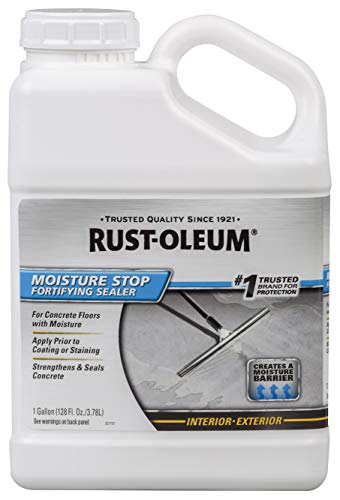
Overview: This penetrating sealer is designed to seal concrete floors and stop moisture from passing through to allow coatings. It bonds and seals without changing the surface appearance and requires about 45 minutes to penetrate. Coverage is up to 200 sq. ft. per gallon.
Best for: Small to mid-size concrete spaces where you want a clear, unobtrusive finish that won’t alter the look of the floor. It’s especially suitable when you plan to apply a protective topcoat after sealing.
Why selected: It provides a straightforward moisture-stop option that targets vapor transmission early in the project timeline, reducing the risk of coating failures later.
Caution: It is a sealer, not a full epoxy barrier, so for areas with persistent high moisture or active leaks, pairing with a deeper barrier may be necessary.
KILZ Basement and Masonry Waterproofing Paint

Overview: A versatile waterproofing paint formulated to block water pressure and provide a durable finish for interior and exterior concrete, brick, and masonry surfaces. It’s designed to resist water infiltration up to a defined pressure and withstand alkali in high-moisture zones.
Best for: Basements, crawl spaces, and other masonry walls where water intrusion is a concern, particularly when both interior and exterior exposure are possible.
Why selected: Its nanotechnology-based barrier delivers an advanced moisture protection approach, useful when you need a more robust defense against water infiltration in challenging environments.
Limitation: Not intended for floors or walls with active ongoing leaks; surface prep and crack filling may be required before application.
Hydro Prime Moisture Barrier Primer (5 Gallon)

Overview: A penetrating moisture barrier and penetrating sealer designed for concrete and masonry floors. It blocks high moisture vapor transmission and primes surfaces for topcoats, making it ideal for high-traffic indoor or outdoor spaces.
Best for: Areas with elevated moisture or vapor transmission where long-lasting adhesion is critical for subsequent coatings, such as driveways, patios, and sports surfaces.
Why selected: It emphasizes improved coating adhesion, which helps prevent delamination of later epoxy or paint systems in moisture-prone environments.
Limitation: As a primer, it is most effective when paired with compatible topcoats; check your coating compatibility before application.
Hydro Prime Moisture Barrier Primer (1 Gallon)

Overview: Similar to the 5-gallon option, this primer seals concrete and masonry floors to prevent moisture gaps that can cause coating failures. It’s suitable for peak-traffic environments requiring durable adhesion.
Best for: Projects needing a one-gallon supply for smaller rooms or for touch-up work where moisture barriers are already in place.
Why selected: It provides consistent moisture control and adhesion improvement in a compact package, helping builders tailor quantities to project size.
Caution: Ensure proper ventilation during application and allow adequate cure time before topcoating.
Everflow MPC Epoxy Moisture Vapor Barrier Kit
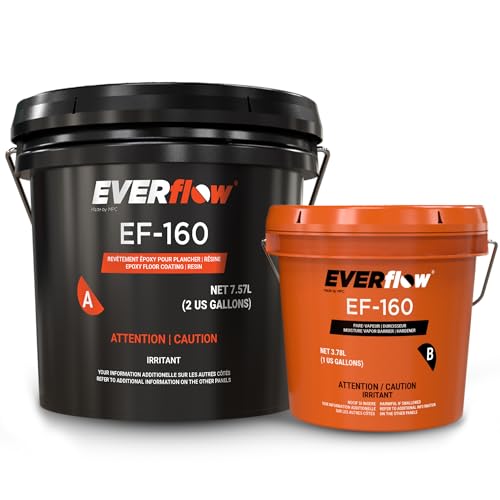
Overview: A 2-component epoxy floor coating designed to control moisture vapor emissions from concrete. It’s indicated as ideal for industrial and commercial projects and for high-humidity or wet areas when properly applied at specified mil thicknesses.
Best for: Industrial spaces, warehouses, or commercial environments where robust vapor protection and chemical resistance are required.
Why selected: The kit format provides a strong vapor barrier with proven performance under demanding conditions, helping prevent coating failures due to moisture.
Limitation: Requires precise mixing and a controlled application environment to meet performance criteria.
SIMIRON Moisture Vapor Barrier Epoxy Primer Kit

Overview: A 100% solids epoxy primer kit, designed to reduce moisture-related issues while providing a low-odor, low-VOC solution. Includes base and activator for a single-coat application that covers about 100 sq. ft. per gallon; 3-gallon kits cover around 300 sq. ft.
Best for: Problem concrete floors needing a high-performance, low-VOC primer before finishing with epoxy or coatings, especially in occupied spaces.
Why selected: Its 100% solids formulation minimizes odor and solvent exposure while delivering strong moisture control and surface readiness for subsequent coatings.
Limitation: Requires careful handling of two components and proper mixing to achieve expected performance.
Buying Guide: Key Considerations For Choosing A Concrete Moisture Barrier
What level of moisture control do you need? If you’re dealing with high vapor emissions or below-grade exposure, an epoxy barrier or nanotech-based waterproofing paint can offer stronger protection than a penetrating sealer alone.
Where is the project located? Indoor basements and crawl spaces benefit from systems designed for confined spaces and low odor. Exterior surfaces or garages may require tougher barriers and alkali resistance for long-term durability.
What surface condition do you have? For new slabs, a penetrating primer plus a topcoat can be sufficient. For deteriorated slabs or slabs with prior polymer failures, a 100% solids epoxy or a dedicated moisture barrier kit often performs better.
What coating will you apply over the barrier? Ensure compatibility between the moisture barrier and your final coating (epoxy, polyurethane, or paint). Some products advise not to coat directly with certain paints or fills.
Application environment and curing times are critical. Some products cure quickly but require precise mixing or controlled humidity; others are more forgiving but offer slower cure times. Always follow manufacturer guidelines for temperature, humidity, and ventilation.
Frequently Asked Questions
- What is a moisture barrier for concrete? A moisture barrier reduces or blocks water vapor from passing through concrete, protecting coatings and reducing damage from moisture intrusion.
- When should I use a penetrating sealer vs. an epoxy barrier? Use a penetrating sealer for light to moderate moisture and when you want to preserve surface appearance. Use epoxy barriers for high moisture, high humidity, or when you require durable, long-lasting protection for coating systems.
- Can I apply moisture barrier products to a damp surface? Many products require a dry surface for best adhesion; follow the label’s moisture content guidelines to ensure proper bonding.
- Is low-VOC important for moisture barriers? Yes, low-VOC or 100% solids formulations are preferable in occupied spaces to minimize odor and exposure during application.
- Do I need to crack-fill before applying a moisture barrier? Cracks and holes should be filled prior to coating according to product recommendations to ensure a continuous barrier.
- Can these products be used on concrete floors? Some products are designed for floors, while others are intended for walls or masonry surfaces. Check each product’s surface guidelines before use.