Answer: For fast, small repairs on walls, look for ready-to-use spackling tubes or compact patching compounds that dry quickly and are easy to sand. This guide targets homeowners, renters, and DIY enthusiasts who want clean, professional-looking results without a full plaster kit. The top picks below cover small fixes, flexible patches, and all-in-one repair kits sourced from trusted brands.
Summary table of selected products
| Product | Best For | Key Benefit |
|---|---|---|
| DAP DryDex Dry Time Indicator Spackling | Small holes and cosmetic cracks | Color indicator shows when dry |
| DAP ElastoPatch Smooth Flexible Patching Compound | Cracks on drywall, plaster, stucco | Elastomeric, crack-bridging formula |
| DIYSELF 9 Pack Drywall Repair Kit | Comprehensive hole and crack repairs | All-in-one kit with tools |
| Sugelary Drywall Patch Repair Kit | Visible repairs and quick fixes | Strong adhesion, virtually invisible finish |
| NINGOO Wall Patch Repair Kit | Apartment-friendly repairs | 2-pack convenience, simple filling |
DAP DryDex Dry Time Indicator Spackling

Product overview: DryDex uses a latex polymer spackle that goes on pink and dries white, confirming dryness within 1 to 5 hours. It is suitable for small repairs on interior or exterior surfaces like drywall, plaster, wood, brick, and stone.
Best for: Quick, low-profile fixes on small holes and hairline cracks. Ideal for homeowners who value a visible color cue to avoid over-sanding or repainting too soon.
Why selected: The color-indicator feature helps ensure proper curing before painting, reducing rework. The 1-ounce size keeps projects simple and manageable for quick touch-ups.
Caution: Works best for small repairs; larger gaps may require a larger DryDex product or a traditional patching compound. Sanding may be needed for a seamless finish.
DAP ElastoPatch Smooth Flexible Patching Compound

Product overview: A white elastomeric patching compound that fills cracks across drywall, plaster, stucco, and more. It resists cracking and shrinking, dries tack-free in about 30 minutes, and paints well.
Best for: Repairs where movement or seasonal expansion might reopen cracks. This is a better choice for plaster or masonry surfaces that see movement or moisture fluctuations.
Why selected: Its flexible formula helps prevent recurring cracks, delivering a longer-lasting patch compared to rigid spackling. Paintability is straightforward and predictable.
Caution: Avoid using on very smooth glossy surfaces without priming; for rough textures, a skim coat may be needed for a flush finish.
DIYSELF 9 Pack Drywall Repair Kit

Product overview: A comprehensive 9-in-1 drywall repair kit including 2x 100g repair paste, extended nozzles, scraper, 2x sandpapers, painter’s tape, and disposable gloves. Designed for holes, cracks, dents, and miscellaneous wall flaws.
Best for: DIYers who want an all-in-one solution with the essential tools for a clean patch from start to finish, reducing setup and cleanup time.
Why selected: The extended nozzles and sandpaper set enable precise application and a smooth finish, making it easier to blend repairs into surrounding drywall.
Caution: The kit is versatile, but users should still follow surface prep steps (clean, dry surface) for optimal adhesion and finish.
Sugelary Drywall Patch Repair Kit

Product overview: A quick-fill drywall patch kit featuring a wall patch and repair paste designed to restore holes, chips, scratches, and dents on interior walls. Claims strong adhesion and an almost invisible finish.
Best for: Homeowners needing a discreet repair on visible walls without professional tools, especially for small to moderate defects.
Why selected: It emphasizes adhesion strength and invisibility, appealing to spaces where patches should blend with the wall color and texture.
Caution: Normal to slightly noticeable texture might remain on very rough or textured surfaces; sanding and priming may improve concealment.
NINGOO Wall Patch Repair Kit
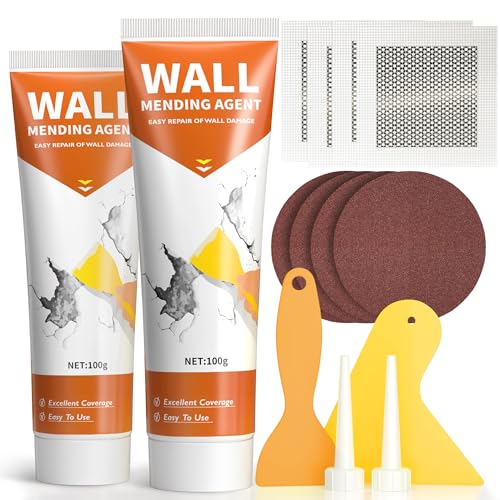
Product overview: A two-pack partition allowing rapid repair of holes and cracks with included patch paste, nozzle extenders, scraper, and sandpaper. Aimed at apartment-friendly repairs with easy application and quick drying.
Best for: Renters and small-space dwellers who need quick, non-permanent fixes that are easy to repaint or touch up later.
Why selected: The kit emphasizes user-friendly operation and fast drying, suitable for day-to-day wall maintenance without a professional finish.
Caution: As a straightforward patch solution, results may vary on textured walls; a final skim coat may be needed for a perfectly uniform surface.
Buying Guide: Drywall Mud In A Tube And Patch Kits
- What type is best for your wall material? For drywall and plaster, use patching compounds with good adhesion and minimal shrinkage. Flexible formulas help with movement-prone areas.
- How important is drying time? If you need fast results, choose products that dry tack-free in 20-30 minutes or have a clear moisture-curing cue (such as color change).
- Do you need an all-in-one kit or a single-tube solution? All-in-one kits are convenient for beginners and renters, while single-tube products work well for quick spot repairs.
- Can you paint over the repair? Look for paint-ready patches or compounds that accept standard wall finishes without priming issues.
- Is concealment important? For high-visibility walls, choose products marketed as giving a near-invisible finish with proper sanding and priming.
- What surfaces do you treat? Some products are suited for interior only; exterior-capable formulations exist but require correct surface prep.
FAQ
- Q: Should I use a color-changing patch like DryDex? A: It helps confirm dryness on small repairs, reducing repainting mistakes for minor holes and cracks.
- Q: When is a flexible patch better than a rigid spackle? A: Use flexible patches for areas subject to movement or moisture fluctuations to reduce re-cracking.
- Q: Can I use these on textured walls? A: Yes, but you may need extra sanding or a light skim coat to achieve a smooth surface.
- Q: Are these suitable for ceilings? A: Many patches work on ceilings, but ensure the product is labeled for ceiling use and follow manufacturer guidance.
- Q: Do I need primer before painting after patching? A: Often yes; primers help seal the repair and ensure even paint absorption, especially on porous patches.
- Q: How long should I wait before painting? A: Drying times vary; follow the product’s instructions for the best results, typically within 30 minutes to several hours.