Looking to upgrade a chimney with authentic stone drama without the weight or high cost of real rock? The best stone veneer for a chimney blends real-appearing texture, DIY-friendly installation, and durable materials suited for indoor or outdoor use. This guide highlights five standout options, explaining who each is best for and why. It’s ideal for homeowners tackling fireplace surrounds, outdoor chimney stacks, or interior feature walls seeking a natural stone look with modern convenience.
| Product | Best For | Key Benefit | Limitations |
|---|---|---|---|
| Maasechs 1 Pack PU Faux Stone Panel | Modern, minimal, Nordic interiors | 3D texture that mimics natural pebbles; lightweight | Moderate size; may require multiple panels for large chimneys |
| Wallwell Faux Stone Wall Panels (1-Pack) | Color-rich, realistic texture on feature walls | Individually hand-finished with depth; true 3.75 sq ft coverage | Single panel is suitable for samples or partial installations |
| LUXEYARD Faux Stone Wall Panels | Indoor/outdoor fireplace surrounds | 3D realism; easy no-mortar installation | Requires careful cutting for tight chimney curves |
| Estate Products Thin Real Concrete Stone Veneer (White Tones) | Flat-wall coverage and quick wrap | Thin, lightweight, broad coverage per box | Individual stones, not panels, for a natural fit |
| Stoneflex Peel & Stick Thin Real Stone Veneer Sheets | Quick, versatile backsplashes or chimney tops | Peel-and-stick adhesive; no mortar | Adhesive performance varies with surface prep |
Maasechs 1 Pack PU Faux Stone Panel for Fireplace and Siding

Best for modern interiors and Nordic-inspired spaces, this 47″ x 23.23″ panel mimics natural pebble texture using advanced coloring techniques. It is lightweight, making installation easier on fireplace surrounds or interior walls. The panel’s moderate size allows for flexible placement on chimney facades or as a backwall accent, but larger projects may require multiple pieces connected for full coverage. Caution: ensure clean, dry backing and verify wall dimensions before purchase to minimize seams.
Estate Products Thin Real Concrete Stone Veneer, BB Color Blend

Best for flat-wall coverage on chimneys or large fireplace surrounds, this option focuses on exceptionally thin, lightweight construction suitable for drywall and most substrates—no heavy fasteners or structural changes required. It provides seamless stone appearance when applying individual pieces for a natural look. Choose this if you want broad wall coverage with a minimal thickness profile; limitation is that it uses individual stones rather than panels, which can require more precise layout planning.
Faux Stone Wall Panels by LUXEYARD, 1-Pack
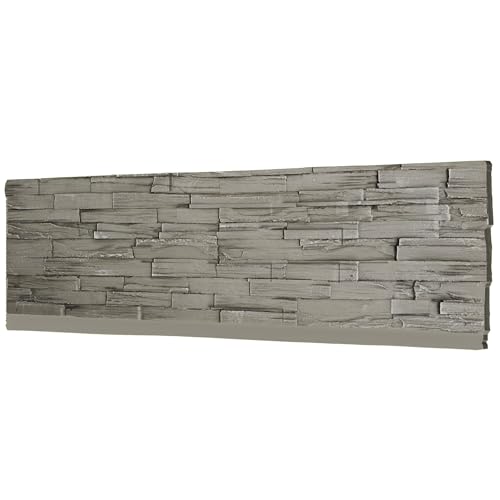
Best for fireplace surrounds and indoor/outdoor installations where a no-muss, no-mortar method is preferred, these 3D PU stone panels simulate rugged stone with rich color variation. They are easy to cut with standard tools and can be applied with heavy-duty construction adhesive and screws. Caution: ensure ample ventilation when cutting and follow adhesive curing times for best adhesion, especially on chimney surfaces that heat periodically.
WallWell Faux Stone Wall Panels 1-Pack

Best for color and texture sampling or finishing complex rows in larger projects, this single-panel option offers true 3.75 sq ft net coverage per panel. The artisan hand-painted finish delivers unique tonal variations that avoid a repetitive look. Use this on a chimney feature wall to test color dynamics before committing to a full installation; limitation is that it’s a single panel rather than a larger sheet for broad coverage.
Buying Guide: Stone Veneer For Chimneys
- Installation method: Choose between panels (quick coverage, fewer seams) and individual stones (more control over fit on irregular chimney shapes). Peel-and-stick options require clean, smooth surfaces; no-mortar options work best on dry, stable walls.
- Weight and substrate: Lightweight PU stone panels reduce load on framing, ideal for drywall and existing fireplace surrounds. For exterior chimneys, ensure weather-resistant materials and proper sealing at seams.
- Texture realism: Hand-finished or multi-tone panels provide a natural look with depth. For highly textured chimneys, plan for cuts and edge treatments to preserve realism along corners and edges.
- Durability and environment: Outdoor uses benefit from UV resistance, water resistance, and flame retardancy. Indoor installations should consider heat exposure near fireplaces and proper fire safety clearances.
- Maintenance: Most PU veneers are easy to wipe clean; avoid harsh solvents near adhesive surfaces. Regular inspection of joints helps prevent moisture intrusion behind panels.
- Budget and coverage: Panels tend to cover more area quickly, while individual stones offer design precision for curved chimneys. Calculate square footage and plan for waste when ordering.
- Color and lighting: Lighting affects perceived texture. Install in a way that natural or ambient light reveals shadows and crevices for a convincing stone look.
Frequently Asked Questions
- Can stone veneer be used on a real fireplace? Yes, most modern stone veneers are safe for fireplace surrounds when installed with non-flammable adhesives and proper clearances from flames.
- Do I need mortar for stone veneer on a chimney? Some options are mortarless or peel-and-stick, while others may require lightweight adhesive or thin-set mortar depending on the product and substrate.
- Is stone veneer weatherproof for outdoor chimneys? Exterior-rated veneers are designed for weather exposure, but verify UV resistance, water resistance, and expansion allowances in your climate.
- How long does installation typically take? It varies by product; panels install faster, while assembling individual stones may take longer but offers precise fit on irregular surfaces.
- Will stone veneer increase fireplace efficiency? Stone veneer primarily changes aesthetics; it does not change firebox efficiency but can affect heat reflection and room ambiance.
- What maintenance is required? Wipe with a damp cloth; sealants are generally not needed for PU veneers, but inspect seams periodically for moisture entry, especially outdoors.